
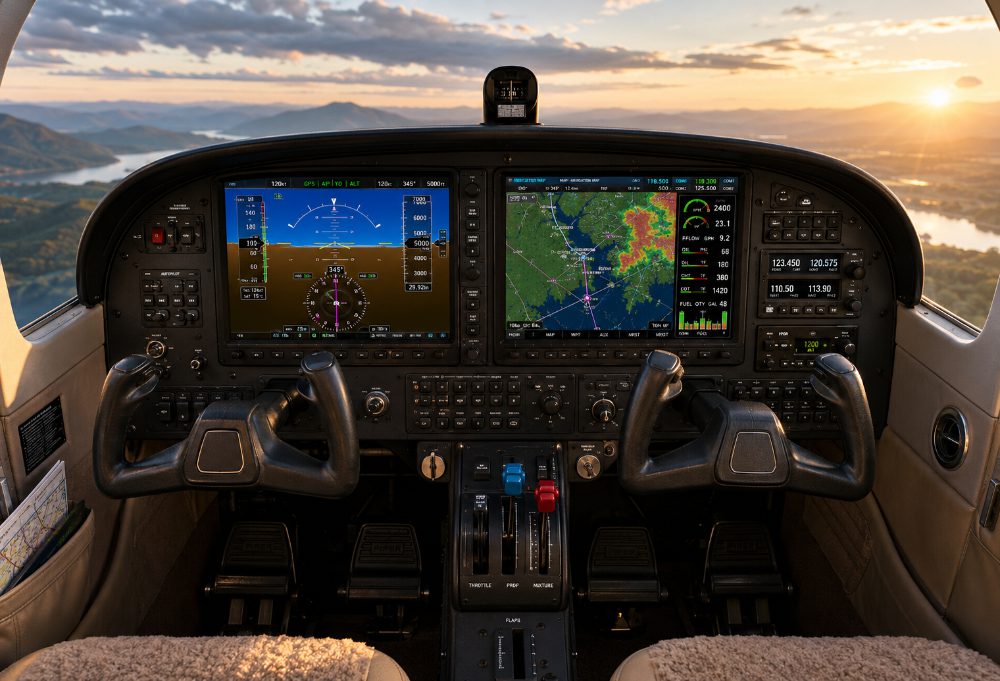
If you have been flying the same trusty aircraft for years, you know the comfort that comes with familiarity. You know every quirk of your analog gauges, every flicker of the needle, and every subtle sound the panel makes on a cold morning startup. But the aviation world has shifted dramatically, and glass cockpit upgrades are no longer just for new factory builds or high-budget operators. They are accessible, practical, and in many cases, genuinely life-changing for pilots of legacy aircraft.
The question is not really whether the technology is worth it. The question is whether now is the right time for you.
What Is a Glass Cockpit and Why Does It Matter?
A glass cockpit replaces traditional analog flight instruments with integrated digital displays, typically large LCD screens that consolidate altitude, airspeed, attitude, navigation, and engine data into a single or dual-screen layout. Instead of scanning six or more individual round gauges, a pilot can read a unified primary flight display (PFD) and a multifunction display (MFD) that paints a complete picture of the aircraft’s condition at a glance.
The significance of this shift goes beyond aesthetics. Analog instruments are mechanical. They wear out, they drift out of calibration, and they can fail independently of one another, sometimes without obvious warning. Glass systems are redundant by design, pulling from multiple data sources and alerting pilots when something goes wrong. For single-pilot operations, which describe the vast majority of general aviation flying, that kind of situational awareness is not a luxury. It is a safety margin.
Beyond safety, modern avionics integrate seamlessly with GPS, autopilot systems, ADS-B traffic, weather overlays, and terrain awareness. Flying through instrument meteorological conditions with a legacy six-pack is a very different experience from flying with a full glass suite that shows you where the weather is, where the traffic is, and exactly where the terrain is below the clouds.
The Most Popular Glass Cockpit Upgrades for Legacy Aircraft
When pilots start researching glass cockpit upgrades, a few names come up consistently. Garmin has led the market for years with its G3X Touch system, which is designed specifically for experimental and light sport aircraft and offers an impressive level of integration at a relatively accessible price point. For certified aircraft, the Garmin G500 TXi and G600 TXi have become the standard-bearers, offering retrofit solutions that can modernize a cockpit without requiring a complete panel rebuild.
Dynon Avionics has also carved out a significant share of the market, particularly with its SkyView HDX system. Dynon has been aggressive in pursuing FAA approval for certified aircraft, and pilots who want a capable system without the Garmin price tag often look closely at what Dynon has to offer.
For those who want to start smaller, even a single Garmin G5 electronic flight instrument can replace a vacuum-driven attitude indicator or directional gyro and provide a meaningful upgrade in reliability and capability. Many pilots take a phased approach, starting with a G5 or two and then building toward a full glass panel over time as budget allows.
Engine monitoring is another area where glass cockpit upgrades provide enormous value. Companies like Electronics International and Garmin offer engine monitoring systems that track cylinder head temperatures, exhaust gas temperatures, oil temperature, oil pressure, and fuel flow in real time, displayed on a clear digital interface rather than buried in a cluster of analog gauges.
What the Retrofit Process Actually Looks Like
Understanding the process before committing is important, and it starts with finding a qualified avionics shop. Not all shops are authorized dealers for all brands, and not all technicians have equal experience with every system. For certified aircraft, the installation must comply with FAA regulations, and most systems are installed under a Supplemental Type Certificate (STC) that legally authorizes the modification.
The scope of work varies widely. Some retrofits are straightforward panel swaps where existing wiring is adapted and new displays drop into existing holes or require minor panel modification. Others involve rewiring significant portions of the aircraft, relocating the avionics bay, or fabricating a custom panel from scratch. A full glass cockpit upgrade on a Cessna 172 or Piper Cherokee can take anywhere from a few days to several weeks depending on complexity.
Before you get a quote, pull together your aircraft’s logbooks, your current avionics inventory, and a clear idea of what you want the finished panel to accomplish. Do you need IFR capability? Do you want integrated autopilot? Are you planning to add ADS-B out if you have not already? The answers to these questions shape the scope and cost of the project significantly.
Budget-conscious pilots should also ask their shop about the trade-in or resale value of the equipment being removed. Serviceable analog instruments, transponders, and navigation radios often have real market value in the used avionics world, and selling them can offset a portion of the upgrade cost.
The Cost Question: What Should You Expect to Pay?
Glass cockpit upgrades range from a few thousand dollars for a modest single-display installation to well over $50,000 for a full panel replacement with integrated autopilot, ADS-B, WAAS GPS, and engine monitoring. The wide range reflects the enormous variety in scope, aircraft type, and equipment selection.
A basic glass upgrade for a simple VFR trainer might involve two Garmin G5 units and an ADS-B transponder, which could come in under $5,000 installed. A fully loaded G600 TXi installation with dual WAAS navigators, autopilot integration, and engine monitoring in a complex single or twin could easily run $30,000 to $60,000 or more.
The honest calculation includes not just the purchase price but also ongoing value. Glass systems reduce your dependency on vacuum pumps, which are a known failure point and a recurring maintenance expense. Modern avionics are also more software-driven, meaning updates can fix bugs and add features over the life of the product in a way that analog instruments simply cannot match.
Insurance is worth a conversation as well. Some insurers look favorably on glass cockpit upgrades, particularly when they include terrain awareness and ADS-B traffic, because the safety record of glass-equipped aircraft in certain categories is meaningfully better than their analog-equipped counterparts.
How to Decide If the Time Is Right for You
Timing a glass cockpit upgrade well requires looking at several factors together. First, consider the age and overall condition of your existing avionics. If you are already facing expensive repairs on aging equipment, the incremental cost to upgrade rather than repair may be smaller than you think.
Second, consider your flying. If you are flying regularly in IMC, operating in complex airspace, or expanding into new mission profiles, the safety and capability gains from glass cockpit upgrades are most directly realized. If you are flying fair-weather VFR circuits on weekends, the case is less urgent, though still worth considering for long-term reliability.
Third, look at your aircraft’s overall trajectory. If you are planning to sell in the next few years, a clean glass panel can meaningfully increase buyer interest and market value, particularly for training aircraft or cross-country machines. If you are keeping the plane for the long haul, an upgrade now means more years of enjoying the technology.
Finally, talk to other pilots who have made the switch. The community of pilots who have upgraded legacy aircraft to glass is large and generally enthusiastic. Their firsthand experience with specific shops, specific systems, and the real-world flying difference is worth more than any brochure.
Flying Forward
The analog gauges that carried a generation of pilots safely through millions of hours of flight deserve respect. But the tools available today represent a genuine step forward in safety, capability, and flying confidence. Glass cockpit upgrades have matured to the point where they are reliable, well-supported, and increasingly affordable. Whether you start with a single display or commit to a full panel rebuild, the investment in modern avionics is ultimately an investment in the quality and safety of every flight you take from here on out.
Need Avionics Experts Near You?
Here at Depot Avionics, Inc., we understand the critical role that modern avionics systems play in enhancing the safety and efficiency of your aircraft. With over 45 years of dedicated service in Alamosa, Colorado, we specialize in providing top-notch sales, installation, and repair services for a wide range of avionics equipment, including radios, flight displays, autopilot systems, and more. Whether you’re looking to upgrade your current systems or ensure compliance with the latest regulations, our expert team is here to assist you every step of the way. Contact us today to explore how we can tailor a solution to meet your specific needs and elevate your flying experience to new heights.